How to Read Traffic-Light Colours on Front of Pack
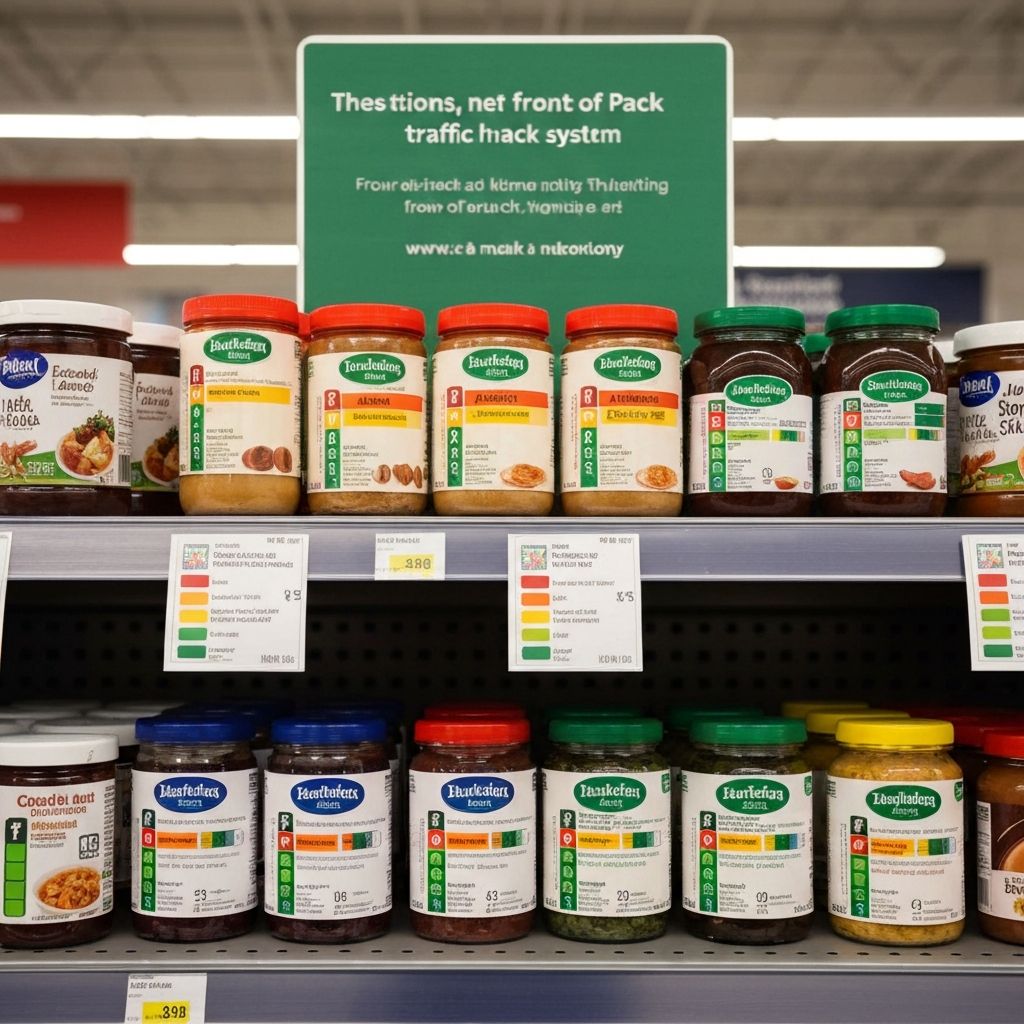
The traffic-light labelling system is a voluntary front-of-pack labelling format used by many UK food manufacturers. The system uses red, amber, and green colour coding to indicate nutrient levels per 100g of the product.
How the Colour Coding Works
Green indicates a low level of a nutrient. Choosing products with more green lights suggests a choice with lower amounts of fat, saturated fat, sugars, or salt.
Amber indicates a medium level. This is a moderate amount that is neither particularly high nor particularly low.
Red indicates a high level of a nutrient. Products with red lights contain higher amounts of fat, saturated fat, sugars, or salt per 100g.
Specific Thresholds for Each Nutrient
| Nutrient | Green (Low) | Amber (Medium) | Red (High) |
|---|---|---|---|
| Fat per 100g | 3g or less | More than 3g up to 17.5g | More than 17.5g |
| Saturated Fat per 100g | 1.5g or less | More than 1.5g up to 5g | More than 5g |
| Sugars per 100g | 5g or less | More than 5g up to 15g | More than 15g |
| Salt per 100g | 0.3g or less | More than 0.3g up to 1.5g | More than 1.5g |
Important Notes About Traffic-Light Labelling
The traffic-light system applies to per 100g values, not per serving values. This ensures a fair comparison between products of different portion sizes.
Traffic-light labelling is voluntary. Some manufacturers use it; others do not. If you do not see traffic lights on the front of a product, you can still check the back-of-pack nutrition information panel.
The system rates nutrients individually. A product might have a red light for sugars but a green light for fat. This does not mean the product is "good" or "bad"—it simply identifies which specific nutrients are present in higher or lower amounts.
Understanding What "High" and "Low" Mean
The thresholds used in traffic-light labelling are based on regulations designed to reflect UK dietary guidance. For example:
- Fat threshold of 17.5g per 100g reflects concerns about high-fat diets.
- Salt threshold of 1.5g per 100g aligns with recommendations to limit salt intake.
- Sugars threshold of 15g per 100g reflects dietary guidance on sugar consumption.
- Saturated fat threshold of 5g per 100g reflects recommendations to limit saturated fatty acids.
Using Traffic Lights for Comparison
Traffic lights are most useful when comparing similar products. For example, if you are choosing between two breakfast cereals, you can quickly see which has lower sugar or salt content by comparing their traffic light colours.
However, traffic lights provide only a quick snapshot of four specific nutrients. A complete picture of a product's nutritional profile requires looking at the full nutrition information panel on the back of the packaging.